
There’s a powerful shift that happens when we change just one word in our thinking. It’s small, almost insignificant at first glance—but its impact on our mindset, performance, and long-term success is profound. That word is “yet.” In a world where we are constantly measuring ourselves against outcomes, timelines, and other people’s achievements, “yet” introduces something we often forget: perspective. It reminds us that we are still in motion, still evolving, and still building toward something greater.
The Trap of Comparison
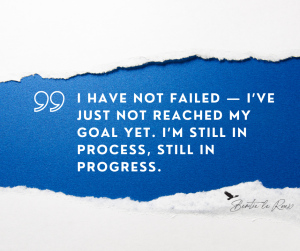 One of the biggest challenges we face is comparison. We look at others who seem to be ahead of us—those who have achieved more, progressed faster, or reached milestones we are still working toward. It’s easy to feel like we are falling behind or, worse, failing.
But here’s the strategic question: are we truly comparing like-for-like?
Imagine running a 100-meter race. If everyone starts at the same line, then comparison makes sense. But what if some runners started 10 or 20 meters ahead? Would it still be fair to measure your performance against theirs?
In life and business, people start at different points. They have different resources, experiences, networks, and timing. When we compare ourselves without context, we distort reality—and often undermine our own progress.
Redefining Failure
We tend to define failure as not achieving a goal within a certain timeframe. But is that really failure?
Consider this: if your goal is 100 kilometers away and you’ve already traveled 50 kilometers, have you failed? Of course not. You are halfway there. You are in progress.
Failure is not about where you are right now—it’s about whether you’ve stopped moving entirely.
The concept of “yet” reframes failure into something far more constructive. Instead of saying, “I didn’t achieve my goal,” we say, “I haven’t achieved my goal yet.” That subtle shift keeps the door open. It keeps you in the game.
Progress Over Perfection
High performers often fall into the trap of perfectionism. They set ambitious goals and expect immediate results. When those results don’t materialize quickly, frustration sets in.
But success is rarely a straight line. It’s iterative. It’s messy. It requires adjustment, resilience, and persistence.
When you adopt the mindset of “yet,” you start to value progress over perfection. Every step forward counts. Every lesson learned adds value. Every setback becomes data—not defeat.
This is where real growth happens.
Staying Committed to the End State
Goals are not achieved overnight. They require sustained focus and follow-through. Yet many people abandon their goals prematurely because they interpret temporary setbacks as permanent failure.
Think about climbing a mountain. If climbers are forced to turn back halfway due to weather conditions, have they failed? No. They simply haven’t reached the summit yet. They regroup, re-strategize, and try again.
The same applies to your goals. Just because you haven’t reached your desired outcome doesn’t mean you won’t. It simply means the journey is still unfolding.
The key is commitment. Stay aligned with your end state. Keep moving forward, even if progress feels slow.
The Power of Perspective
At its core, the concept of “yet” is about perspective. It shifts your focus from a fixed endpoint to an ongoing journey.
Instead of asking, “Why haven’t I succeeded?” you begin asking, “What’s my next step?”
Instead of seeing gaps, you start seeing opportunities.
Instead of labeling yourself as a failure, you recognize yourself as a work in progress.
This mindset doesn’t just improve your emotional resilience—it enhances your strategic thinking. You become more adaptable, more solution-oriented, and more committed to long-term outcomes.
Embedding “Yet” Into Your Daily Thinking
Adopting this mindset requires intentional practice. It’s about catching your internal dialogue and reframing it in real time.
“I’m not where I want to be… yet.”
“This isn’t working… yet.”
“I haven’t figured this out… yet.”
These small shifts compound over time. They build confidence, sustain momentum, and create a foundation for continuous improvement.
In a business context, this is particularly powerful. Teams that embrace “yet” are more innovative, more resilient, and more likely to push through challenges instead of retreating from them.
Summary
The concept of “yet” is more than just a motivational phrase—it’s a strategic mindset tool. It helps you move beyond comparison, redefine failure, and stay committed to your goals. It reminds you that progress is still progress, even if the end result hasn’t been achieved.
You are not behind. You are not failing. You are in process.
And that process, if you stay committed, will lead you exactly where you want to go.
So here’s the question:
Where in your life or business do you need to replace “I’ve failed” with “I haven’t achieved it yet”—and what action will you take next as a result? 🤔